Putting Pen to Paper
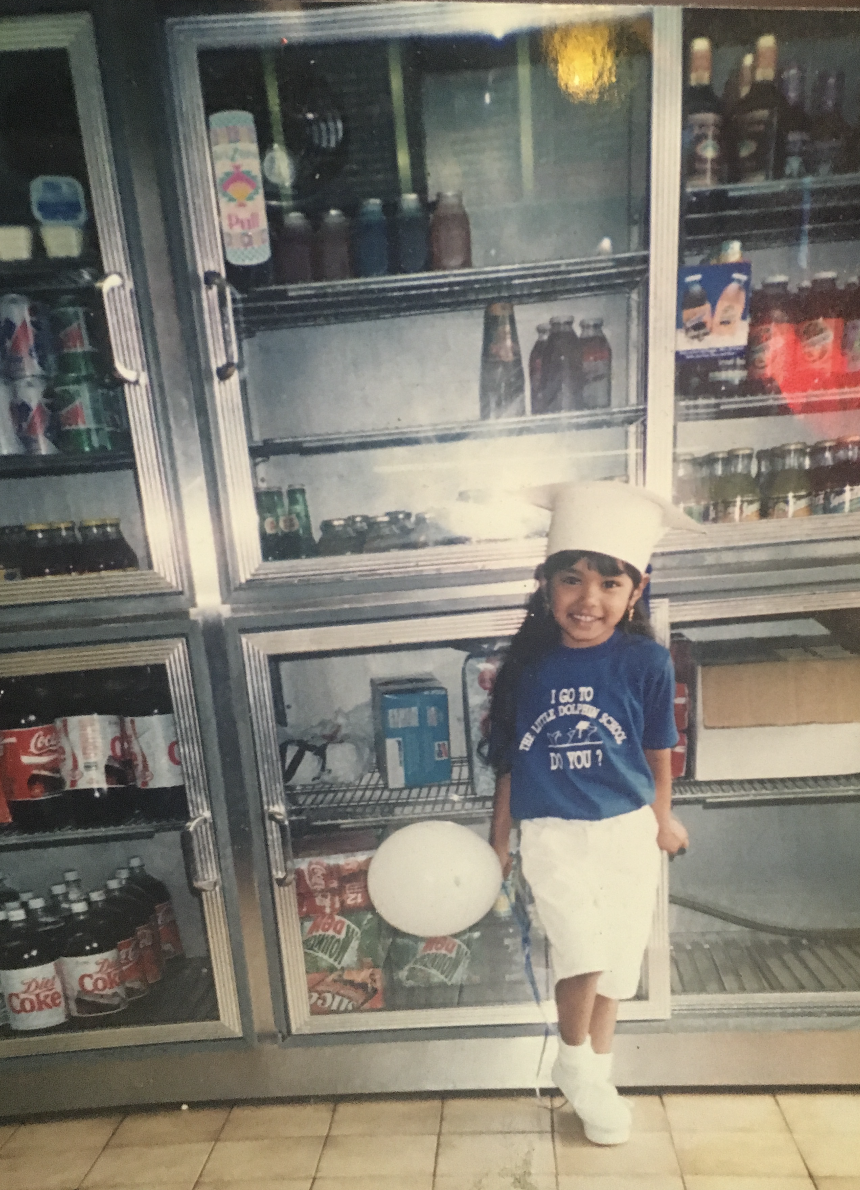
Kristian, age 5, posing after graduation from The Little Dolphin Pre-School in Brooklyn, NY.
Keynote Address delivered at the New Jersey Women's and Gender Studies Consortium Undergraduate Colloquium at The College of New Jersey on March 27, 2026.
Good afternoon everyone,
Thank you so much for your time and energy today – I hold extra gratitude for the organizers of today’s gathering, with extra kudos to thee Cecelia Colbeth and Dr. Ileana Nachescu for their leadership as co-chairs. I extend deep thanks to the folks who are keeping us fed and safe, the often invisiblized, racialized, and gendered labor of the The College of New Jersey (TCNJ) staff working here to make today’s event possible. I also offer my respect and appreciation for the students who presented today and for allowing us to be students of their work and organizing. To my comrades teaching, living, and mentoring through a Women’s, Gender, and Sexuality grounded consciousness or as Professor Colbeth so aptly shared earlier, our partners in feminist crime, it is through your example and generosity that our field is as bright and expansive. As Leanne Betasamosake Simpson asserts, our presence is a weapon and I am honored to be in your company.
I invite you to practice self-determination, to trust your internal compass as you receive and make sense of the invitations I hope to offer. I hope you feel empowered to be present in ways that align with your needs, that you can be comfortable in your body, fidget, scribble, and finger tap when you feel called, I also encourage snaps, affirming head nods, and the occasional mean mug mmm when appropriate.
I’m humbled by the invitation to speak with you, to share some of my insights on the depth and scope of Women’s, Gender, and Sexuality studies, what it means for me to shepherd the National Women’s Studies Association in these tenuous socio-political times where we are under continued and intensified attack, and to do so I found it important to take pause and sink into what I do best, which is reflect.
I have often found solace at the delicate juncture of pen and paper. I once shrank away from classroom discussions, introductions in echoing lecture halls, and uncurled my spine in writing – a sanctuary from the fear of tripping over the rhythmic sounds of my name.
Kristian Contreras – an amalgamation of harsh consonants, lullabies whispered in Spanglish, and my father’s weathered hands. My name is made of simmering curry, the One Train, and wallets full of last month’s bills. I come from red, white, and blue birthdays, burned concon the color of my skin, hand-me-down hijabs stowed away among Christmas lights, and the lilt of my mother’s colonized tongue. I was a precocious little girl whose voracious appetite for learning was often met with exasperation, “chatterbox” scribbled on my report cards, and eye rolls. Over time, teachers and classmates watered wells of shame for my growing curiosity, my constant hand in the air, and I learned to curl my spine deeper and deeper into my seat, my confidence flickered like a too-short wick and my silence soon became armor for my uncertainty.
By the time I stepped foot on my undergraduate college campus, I lost track of the “where are you from’s” and the corrections of the Guyanese Creole that peppers my speech. With every mispronunciation, my name started to sound like an apology for what feels like gifts from my parents, my cultures, and my ancestors. I found myself in what Melissa Harris Perry calls, crooked rooms with warped images of my humanity framed on its walls. Facing constant stereotype and presumptions of incompetence and under preparation, I was expected to contort myself to fit these characterizations of what a young Black Queer woman was meant to be at White Serving Institutions. I had to write myself into the margins of rented textbooks and the cracks of plantation-style campus sidewalks after class after class after class where I was one of, if not the only, student of color. In these education spaces, I was shaped into showing up amongst my peers as a resource – a living translator of critical race theory, Queer theory, decolonial praxis and what the heck political economy means, etc. etc. – instead of as a student in my own right.
I sought refuge in library stacks and in office hour appointments with interdisciplinary professors who gifted me with more than they know. In their classrooms, I dug my hands in Alice Walker’s garden and learned to plant seeds of possibility of my own. I held hands with Janie in Their Eyes Were Watching God and learned that my story could be a song with melodies of love and freedom instead of a hymn rooted in pain. My professors broke down theory and made room for me to falter, make mistakes, shift, and grow. I found syllabi featuring writings of women & gender non-conforming luminaries who looked like me and drained the wells of loneliness with each page of This Bridge Called My Back. The richness of womanist writing brought clarity to my fears- that perhaps I was measuring myself with a rubric authored by White cis-heteropatriarchy and standards too warped to fit my brilliance.
I had to grasp the edges of these colonial metrics and excise it from the core of my personhood and redefine what it would mean to be an impressive, acceptable, and palatable Black woman academic. It was through feminist methodologies that I found the tools to tear down those figurative crooked rooms, become an alchemist of storytelling, and embrace being a bridge between the many spaces I left behind, and am perpetually journeying back to reclaim, as a first-generation American and student. I realized that the scholars on my reading list did not include the knowledge producers down the block who taught me that no one can tek my education, the sensuous whine that accompanies the Diwali Riddim, the warmth of my aunts’ monthly book clubs, or the way Lucille Clifton made me feel alive BUT I could name them in my own work because my communities’ survival stories are woven into the fabric of my clothes, and as Audre Lorde reminds us, survival is not an academic skill. I found kinship amongst rag tag feminists in and outside of academia and felt coherent amongst mirrors of similar, yet beautifully different, lived experiences. The grammar of my feminism found shelter in collectives vs. academic committees and embers of courage felt more and more alive in my spirit.
I reunited with the precocious 8 year old version of me and enveloped myself in the embrace of Borderlands/La Frontera and felt the possibility of a left-handed world with my fingertips. As a no sabo kid, I introduced myself with confidence, rolled the r’s in Contreras, and learned to answer “here” when asked where I am from; and to repeat “here” when asked “where are you really from”. I found absolution in theories of intersectionality and identity development, learned to recreate recipes of familiar meals with revolution on the menu, and lost myself in pages of June Jordan’s poetry. I grew confident in my skin, found bell and Beverly, traded my silence for the audacity of an insurgent education, and syncopated my heartbeat to the melodies of my own name.
I clawed at stereotypes and inherited deficits, overflowed from the constraints of identity check boxes, and swam across an ocean of immigrants to climb every insurmountable hill and stand, ten toes down, in the irrevocable truth that Black feminists have always found a way despite the pressures of a world designed to snuff out our light. My feminist education helped me feel at home in a body that I had learned to shrink. In curriculum design, workshop facilitation, and loving mentorships I sharpened my tongue atop the shoulders of my chosen family, feminist freedom warriors, and histories I unearthed under the shroud of anti-Blackness and American assimilation. I began to brush out the knotted worries of imposter syndrome and internalized –isms, and made braids of confidence atop my once perpetually down-turned head.
I have now crossed three higher education graduation stages, becoming the first in my family to earn a PhD and the first, for many I encounter, Afro-Latina with a PhD. I hung my diplomas in polished frames along the walls of those once crooked rooms, and know that the power and privilege of my diplomas equips me with the responsibility to push against interlocking systems of oppression to nurture or create spaces of freedom as an extension of the sanctuary I once found between pen and paper.
I’m often asked how I feel about shepherding the National Women’s Studies Association in a time where our work and leadership is under heightened attack – if I am worried about job security, the risk of public attack, or making enough money in a “dying” field. Instead of responding with statistics, projections on the major’s return on investments, or a 30 page slide deck on the material conditions of our exploitative political economy (which I am happy to do, just to be clear), I reframe the question to an exploratory one – why are we under attack? It is because we, as a field, are successful.
A Women’s, Gender, and Sexuality studies education equips us with the tools to begin to ask new questions rather than search for neat answers, to design liberatory spaces that give voice to those of us relegated to the margins, disrupts long-storied legacies of erasure in other disciplines, and made possible an autonomy of self once codified in laws and legislation. A feminist education is threatening, because I know first-hand that the caress of an empowered standpoint epistemology and Indigenous theorizing of circular memory and transformation, can replace a student’s once curved spine with a backbone of steel. We know that the canon of colonial education will teach us to yearn for a seat at the table while socializing historically marginalized peoples as menu items – subjects to be studied and consumed.
Our field is shaped by Third World Women and survivors once caught in the teeth of empire, by first generation dreamers whose potential flows beyond documented citizenship, poetry and prose that illustrate ethnographies of human connectivity and transnational imagined communities… by educators in this room who participate in a reciprocal dissemination of knowledge that helps us cultivate new or reclaimed ways of building power. Possibility models who show up and defy any and every human-made binary or border, and dreamers who encourage us to stretch ourselves into radical self-acceptance. I am humbled by the deep awareness that top scholars and activists in nearly every other field are grounded in feminist ethics and praxis – Angela Davis and Judith Butler in Philosophy, Barbara Ransby in History, Maria Rovito in health sciences, Takiyah Nur Amin in Dance Studies, Sarah Small in Economics, Linda E. Carty in Africana Studies, Hortense Spillers in English, Karrieann Soto Vega in Composition and Cultural Rhetoric studies, Katherine McKittrick and Ruth Wilson Gilmore in Geography, Kishi Ducre in Environmental Justice, Chandra Talpade Mohanty in Education, Holly Smith in Library and Archive Sciences, Beverly Guy Sheftall and Heidi R. Lewis in American Studies, Nada Elia in Comparative Literature, Michelina Ferrara in social design, Jessica N. Pabón in Performance Studies, Brittany Brathwaite in critical psychology and public health, and I can go on and on.
Our field constantly invites us to ask what do you protect and what power do you serve? How do we define community and how do we earn intimacy to one another? We are reminded that while subjugated through structural inequalities we are never dispossessed of our agency. We are prompted to enact solidarity as a toned muscle rather than a transaction and reminded that scarcity has no home in innovation. I am a product of mutual aid like the free breakfast program at PS. 159, passing around the same $50 amongst my homegirls, being fed by women elders down Liberty Avenue, and the Women’s & Gender Equity Centers that were my refuge on campuses. And that same love emanates in places like Siempre VIVAS Metro at the University of Puerto Rico where faculty collectives crowd fund to support survivors of assault, Spelman College’s Women’s Research and Resource Centers hosts the first and only feminist conference in honor of a Black woman (Toni Cade Bambara student activist conference), and here at the New Jersey Women's and Gender Studies Consortium where students can be affirmed as emerging scholar-activists in their own right, to sink into a space rooted in a shared political edge AND to receive an honorarium to support their work. You, WE, are proof that we have always found a way through and beyond.
The question of fear and uncertainty does not take root in my mind map because victory loves preparation and I/we am/are principled and educated –Toni Cade Bambara’s teaches us that we are perpetually “substitute[ing] a militant mouth for a radical politic” and when the university pushes us out, we find ways to gather around a kitchen table, community centers, back yards, and salons to keep the work alive. Gloria Anzaldúa reminds us that “we are learning to depend more and more on our own sources of survival” and that WE are the architects of what it means to survive whole. I want to remind you that our field is alive, threatening, successful, creative, insurgent, pleasure-filled, speculative, healing, and incisive - that our ancestors and predecessors did not entrust deep reservoirs of knowledge and courage to shallow banks. And in this metaphor, I invite you to wade with me because the river is allowed to change its shape… because it’s/we ‘re still committed to its direction. WGSS prepares me, actively as a lifelong learner, with more courage than shame – because we have and continue to create so much out of necessity and imagination. And each of us in this room, have a shared stake in repair and liberation that ebbs beyond what the university can offer us.
Perhaps that invitation arrives in a moment where you do not feel ready, you may feel nervous, or small. I meet you in this pressure and gently affirm that it is impossible to know everything, impossible to be perfect or get it “right” every single time. And that is what we learn in WGSS classrooms and counterspaces – that we don’t know everything but together we know a lot. That each of us has a role to play and meaningful ways of sustaining one another so that we do not over promise and under deliver for our communities, for ourselves. Sometimes the most radical space you find might be your local library or seated at a loved one’s kitchen table. I am nourished by Alexis Pauline Gumbs’ balm that “the university will use me alive and use me dead. The university does not intend to love me. The university does not know how to love me. The university in fact, does not love me. But the universe does.”
And for me, this work, this universe that we co-create infuses my life with more energy, more hope, more joy, and more confidence that I can meet this moment where so many are facing a crisis of courage, with the sharpest tool a feminist education has afforded me – which is the unwavering belief that I deserve to speak my name as if it tastes like the liberation of unclipped phoenix wings rising from the ashes of deficits and erasure and that the syllables of your name should taste just as delicious.
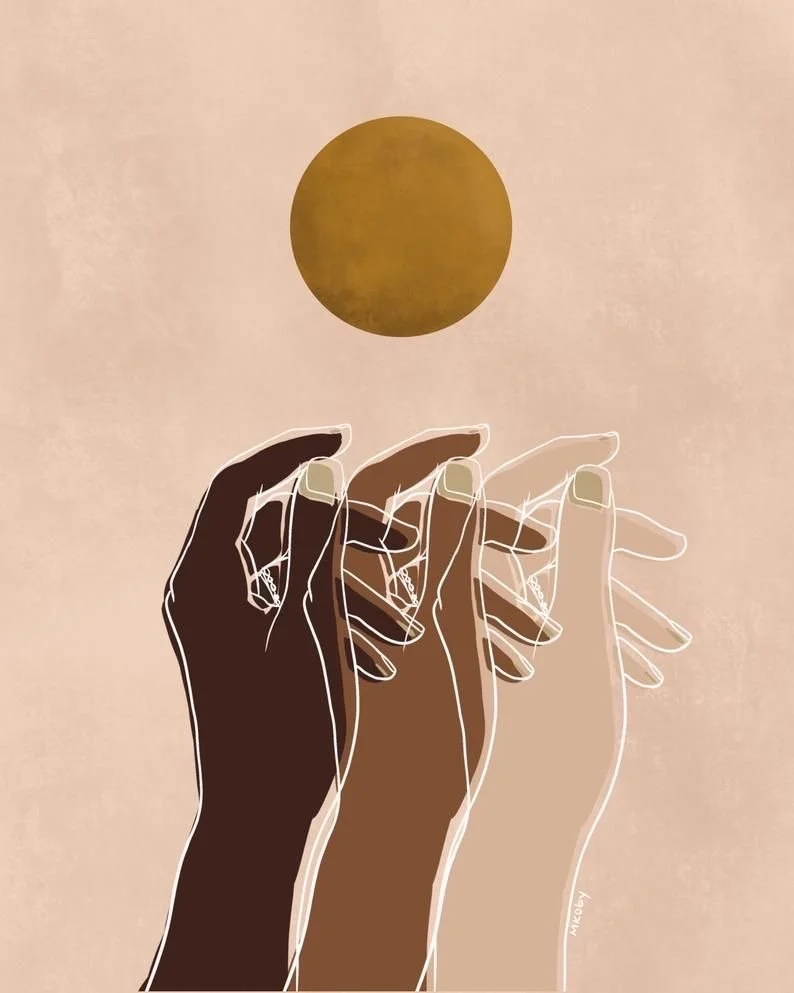
So now that you’ve put pen to paper, written yourselves into and beyond literal margins, I invite you again to wade with me. Let us be like water, knowing that how we do this work may change shape but our conviction makes it so that we never lose sight of our destination. Let your, my, our hands shape feminist futures and pockets of the present that makes this universe a place of possibility that loves us back.